
Industries
ERP for Industrial Equipment Businesses, Delivered by NetSuite Specialists
Machines change the way we live.
Whether you manufacture, distribute, or service industrial equipment, we simplify the systems behind your operations so you can focus on delivering the machines that keep Australians moving.
WHY US?
Why the right NetSuite specialist matters for industrial equipment businesses?
Industrial equipment businesses manage complex operations across manufacturing, distribution, installation, and service. Klugo work alongside teams on the floor to simplify how work flows across finance, inventory, production, and field service, using deep industry experience and NetSuite ERP.
That leads to better inventory control, improved production visibility, stronger service management, and real-time insight across equipment, parts, and field operations.
Klugo simplify the move to one system for all your operations.
Streamline accounting and boost compliance.
Equipment orders and complex sales.
Coordinate suppliers, logistics, and deliveries.
Manage customers and opportunities.
Track equipment, parts, and stock levels.
Manage installations, maintenance, repairs.
Track lifecycle, service history, and warranties.
Plan builds, assemblies, and manufacturing.
How we bring your operations into one NetSuite platform
Growing industrial equipment businesses often end up running across disconnected systems, spreadsheets, and manual reporting.
We bring everything into one NetSuite platform, working with your team on the floor to connect operations, finance, supply chain, and service.
With real industry experience, we simplify the setup, automate routine work, and deliver a lean system that fits your business today, with a clear path to scale as you grow.
Connected financials
Klugo configure NetSuite Financials and OneWorld to centralise general ledgers, manage subsidiaries, automate consolidation, and support revenue recognition so finance teams no longer rely on spreadsheets for reporting.
Automated order‑to‑cash
We implement NetSuite order management and billing workflows that connect quoting, sales orders, invoicing, and payments, reducing manual processing and improving visibility across the entire sales cycle.
Inventory and supply chain visibility
Klugo configure NetSuite inventory management, purchasing, and supply planning tools to give real‑time visibility across warehouses, suppliers, and logistics operations.
Project and job cost control
Using NetSuite project accounting and job costing, we help track labour, materials, and subcontractor costs to provide accurate project margins and financial visibility.
Field service and asset management
Klugo deploy NetSuite field service capabilities to manage installations, maintenance schedules, asset lifecycle tracking, and service history across customer equipment.
Production and assembly operations
For manufacturers and equipment builders, we implement NetSuite manufacturing and assembly workflows to manage bills of materials, production scheduling, and shop floor reporting.
NetSuite optimisation and extensions
We extend NetSuite with automation, integrations, and additional modules to support evolving operations, including warehouse management, advanced reporting, and API integrations connecting IoT devices, equipment telemetry, and remote monitoring systems to track machine performance and service activity.
Ongoing NetSuite support
Our team provide ongoing NetSuite administration, performance optimisation, troubleshooting, and system enhancements to keep your operations running smoothly as the business grows.
Deep experience across industrial machinery sectors
Klugo began inside a CNC machinery business, so industrial equipment operations are familiar ground.
We work closely with founders, engineers, and technicians in long-standing engineering firms, spending time on factory floors and regional workshops where parts availability, technician scheduling, and keeping critical machines running shape daily decisions.
CNC and precision machinery
Production planning, job scheduling, global parts, service management.
Construction machinery
Site delivery, procurement control, inventory tracking, project coordination.
Structural and fabrication
Job costing, production scheduling, install tracking, project margins.
Pumps and compressors
Service contracts, uptime tracking, maintenance scheduling, asset history.
Medical device providers
Job costing, production scheduling, install tracking, regulatory compliance, reporting.
Precision scientific equipment
Industrial robotics and motion systems
Warehouse technology providers
Mechanical lifting and handling equipment
Telecom equipment
Heavy vehicles and components
Vehicle attachments and customisations
Temporary power and energy systems
Infrastructure equipment rental
Don’t see your industry?
This list isn’t everything. Tell us more, and we’ll share what we know about your industry.
Rapid growth drove a reassessment of systems to improve reporting timelines, gain real-time financial visibility, and support scalability. Moving from fragmented systems to an integrated platform is expected to lift productivity by up to 20%, delivering end-to-end visibility across manufacturing, operations and financials.
CFO
Schott Minifab
Schott Minifab, part of Schott global materials technology group, specialises in microfluidic design and manufacturing for diagnostics and life sciences. Klugo supported the implementation of NetSuite, improving visibility, coordination, and operational control across their production and delivery workflows.
NetSuite improved scheduling across maintenance, projects, and breakdowns, delivering faster response and resolution, while reducing lost stock and tools by 98% and removing manual compliance paperwork.
Managing Director
Headland Technology
Headland, an Australian industrial machinery distributor and service provider, worked with Klugo to implement NetSuite, centralising systems, eliminating paper, and enabling real-time field service operations with improved scheduling, visibility, and efficiency.
The new ‘task only’ and ‘break fix repair’ field service enhancements, particularly around capturing labour and consumables in mobile and creating tasks directly from transactions, are working well. Klugo has been great to work with on the recent enhancements.
Director and Sales Manager
G Mobility
GMobility, a provider of assistive technology and mobility equipment, delivers sales, hire, installation, and maintenance services across Victoria. Klugo supported the rollout of NetSuite and continues to assist with ongoing system optimisations and operational improvements.
Trusted by businesses in this industry














Case Study
Headland Technology achieve operational excellence.
Headland improved scheduling, stock control and visibility with ERP for industrial equipment businesses with Klugo.
Case Study
Schott MiniFAB gain business transparency with NetSuite.
MiniFAB improved visibility and streamlined operations with a tailored ERP, supporting scalable growth and efficiency.
Industry experts, certified developers, agile process. We value mateship, teamwork, and creating lasting partnerships.
Common questions about managing industrial equipment operations.
These are the common questions we hear from service, equipment, and operations teams dealing with disconnected systems, manual processes, and limited visibility.
Yes. NetSuite Field Service Management connects scheduling, asset records, service history, parts usage, billing, and reporting in one system so office teams and field teams are not working off separate records.
Yes. NetSuite Demand Planning and multi-location inventory help businesses forecast demand, set planning rules by location, and generate transfer orders, purchase orders, or work orders more systematically.
Yes. NetSuite’s asset management capabilities support lifecycle tracking, service history, maintenance records, and automated warranties, which helps reduce the guesswork around what is covered and what is billable.
It can help by connecting inventory, fulfilment, field activity, and billing more tightly, so the handoff from warehouse to delivery to install is less manual and easier to track.
Yes. NetSuite Fixed Assets Management and Field Service Management both reduce manual tracking by keeping asset, depreciation, maintenance, service, and billing information in the platform rather than across spreadsheets and disconnected tools.
Yes. NetSuite FSM gives technicians access to real-time asset history, service records, job details, and parts information, while truck and van inventory tracking helps ensure the right parts are available before the visit.
Yes. NetSuite Demand Planning is designed to predict required inventory from historical demand or sales forecasts, with parameters like safety stock, lot sizing, supply type, and planning time fences to better balance availability and working capital.
NetSuite brings reporting, financials, field activity, inventory, and asset information into one environment, it becomes easier to spot billing lag, inventory leakage, poor utilisation, and profitability issues that stay hidden in fragmented systems.
Klugo would typically structure NetSuite so the asset record becomes the anchor point. NetSuite can track lifecycle stages, maintenance, historical usage, service history, warranty status, and related costs, while field jobs and inventory usage can flow back to that record.
Use it when quoting has become genuinely complex: configurable machinery, tiered pricing, bundled service, volume discounts, or rules that sales staff should not be calculating manually. If your quotes are still fairly standard and low-volume, CPQ may be too much too soon and core sales and pricing controls may be enough first. NetSuite’s procurement and item structure already support pricing, vendor, and purchasing control, so not every business needs to jump straight to advanced quoting.
It is worth it when warehouse accuracy, speed, and control are becoming pain points: multi-location stock, barcode scanning, pick-path efficiency, cycle counting, replenishment, bin control, and fewer mis-picks. If you are still running a small, simple warehouse with low SKU complexity, standard inventory may be enough before moving to WMS.
It makes sense when the business needs more than basic assembly: routings, labour costing, WIP tracking, production scheduling, manufacturing execution, finite capacity scheduling, or stronger plant-to-enterprise visibility. If the operation is still light assembly without separate WIP or labour tracking, Work Orders and Assemblies may be the better starting point.
It makes sense when parts demand is hard to predict, branches compete for stock, or planners are relying on spreadsheets and gut feel. It is especially useful once a business has enough transaction history, location-level inventory, and repeatable buying patterns to generate meaningful demand and supply plans. If the data is still poor or the item master is messy, that clean-up should happen first.
Because NetSuite’s strength is that it brings financials, inventory, service, planning, and reporting into a unified platform. For equipment businesses, that matters when margin leaks happen between quoting, procurement, warehouse movements, field work, and billing. A more fragmented stack can still work, but usually brings more integrations, more maintenance, and more room for data mismatch.
Yes. NetSuite supports multi-subsidiary structures, shared vendor relationships, cross-subsidiary fulfilment, and consolidated close processes, which is important for equipment groups expanding into more branches, regions, or legal entities.
In practice, NetSuite works best when it becomes the system of record for core operational and financial data: items, inventory by location, asset records, purchasing, transactions, and reporting. That gives service, supply chain, finance, and operations teams one version of the truth instead of multiple versions floating around.
The clearest ROI usually comes from reduced manual handling, fewer stockouts and mis-picks, better first-time fix rates, tighter billing, better warehouse efficiency, stronger profitability reporting, and lower reliance on disconnected third-party systems.
A sensible path is usually staged: core financials and inventory first, then warehousing, field service, or manufacturing based on where the biggest operational pain sits, then more advanced planning, reporting, and automations after the foundation is stable.
The priority data is usually item master, inventory by location, purchasing records, core financial data, asset records, maintenance details, and the operational records needed to support ongoing service, planning, and reporting. If the business is implementing fixed assets or service workflows, asset details and maintenance schedules matter early.
By not rolling out every module at once. NetSuite’s module options support phased adoption, so businesses can start with what they need now and add deeper capability once users, data, and workflows are stable.
Usually the early priorities are whichever systems directly affect order flow, warehousing, service delivery, or reporting. NetSuite’s APIs, mobile capability, and native workflow tools support extension, but the point is to avoid bolting on unnecessary complexity too early.
Because the real work is not just switching software on. It is designing the operating model inside the platform: item logic, asset structure, location flows, field processes, warehouse controls, and reporting. For industrial equipment businesses, that design work is where projects either stay lean or get expensive fast. The phased model is usually the safer move.
Usually the first wins are approvals, replenishment triggers, billing flows, payment handling, bank reconciliation, and service-related processes where manual re-entry is slowing the business down. NetSuite has workflow, payment, reconciliation, and dunning capabilities that are practical early targets.
The value comes from using NetSuite as the operational core and extending from there, rather than copying the same information across multiple systems. NetSuite supports integrated records, workflow logic, and extension paths so external tools can be connected with less duplication.
By treating item setup, location logic, vendor controls, asset records, and transaction approvals as ongoing disciplines, not one-off implementation tasks. NetSuite supports structured item records, vendor data, approval routing, and reporting that make bad data easier to spot and correct.
A good post-go-live model is not just break-fix. It should cover ongoing optimisation, reporting improvements, workflow adjustments, user support, and staged rollout of more capability such as WMS, advanced manufacturing, planning, or finance automation when the business is ready.
Insights for industrial equipment, manufacturing and service operations
Practical insights for industrial equipment businesses managing manufacturing, inventory, field service and multi-site operations. Covering maintenance workflows, asset tracking, supply chain visibility and operational efficiency across equipment lifecycle.
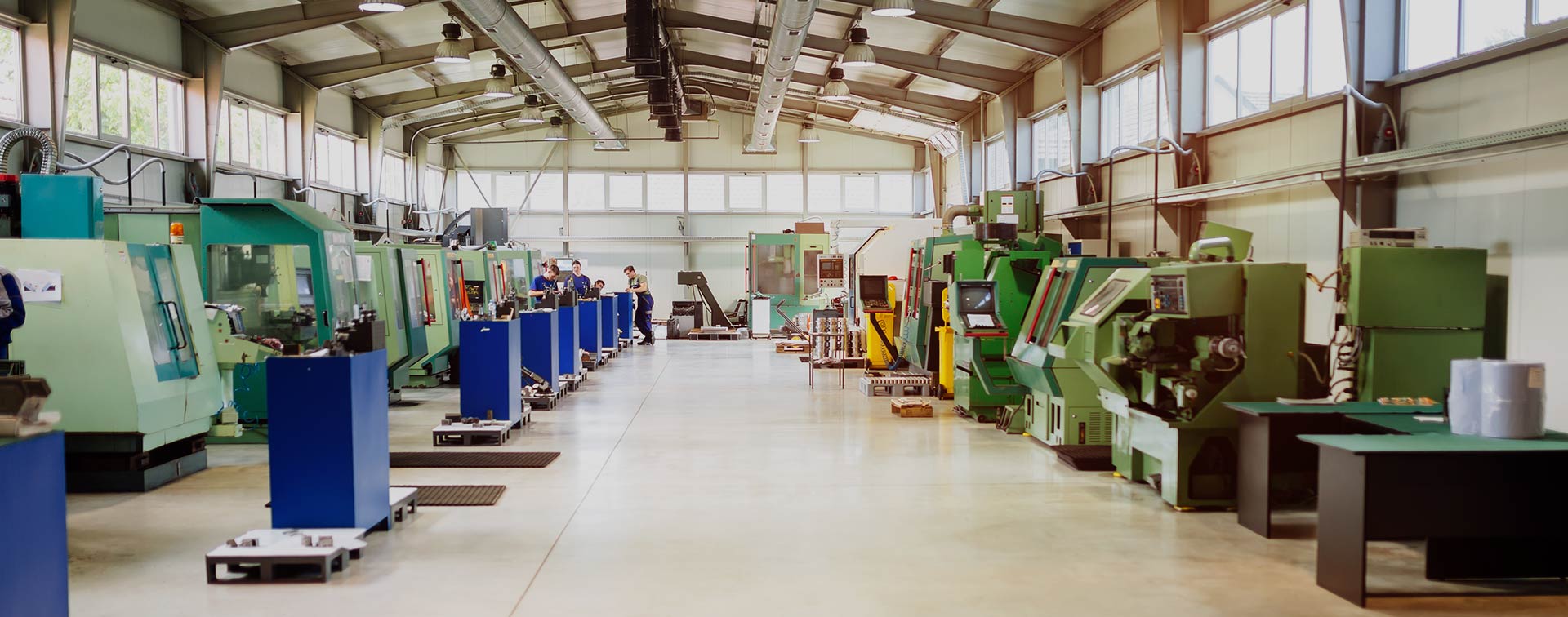
EOFY 2026 Checklist for Industrial Equipment Businesses
EOFY 2026 is crunch time for industrial businesses. Clear stock, bill jobs, and clean your books now to stay compliant, improve margins, and plan FY27.

CEOs Mastering the Art of Negotiation in Medical Device Industry
Curious how top CEOs negotiate in the medical device industry? Explore win-win strategies, pricing tips, and vendor relationship tactics for long-term growth.

Strengthening Australia’s Healthcare Supply Chain: Lessons Learned
Discover how SpaceLogic thrived during the pandemic. Learn their innovative approach to healthcare supply and resilient, local manufacturing.
You Move High-Quality Machines. Is Your Customer Service Like Clockwork?
Ensure your top-notch machines are backed by customer service that ticks like clockwork. Discover how proactive maintenance transforms performance.